The Machine Before Remembrance
From Circuits to Soul: A Rabbānī Meditation on the Empires of Attention

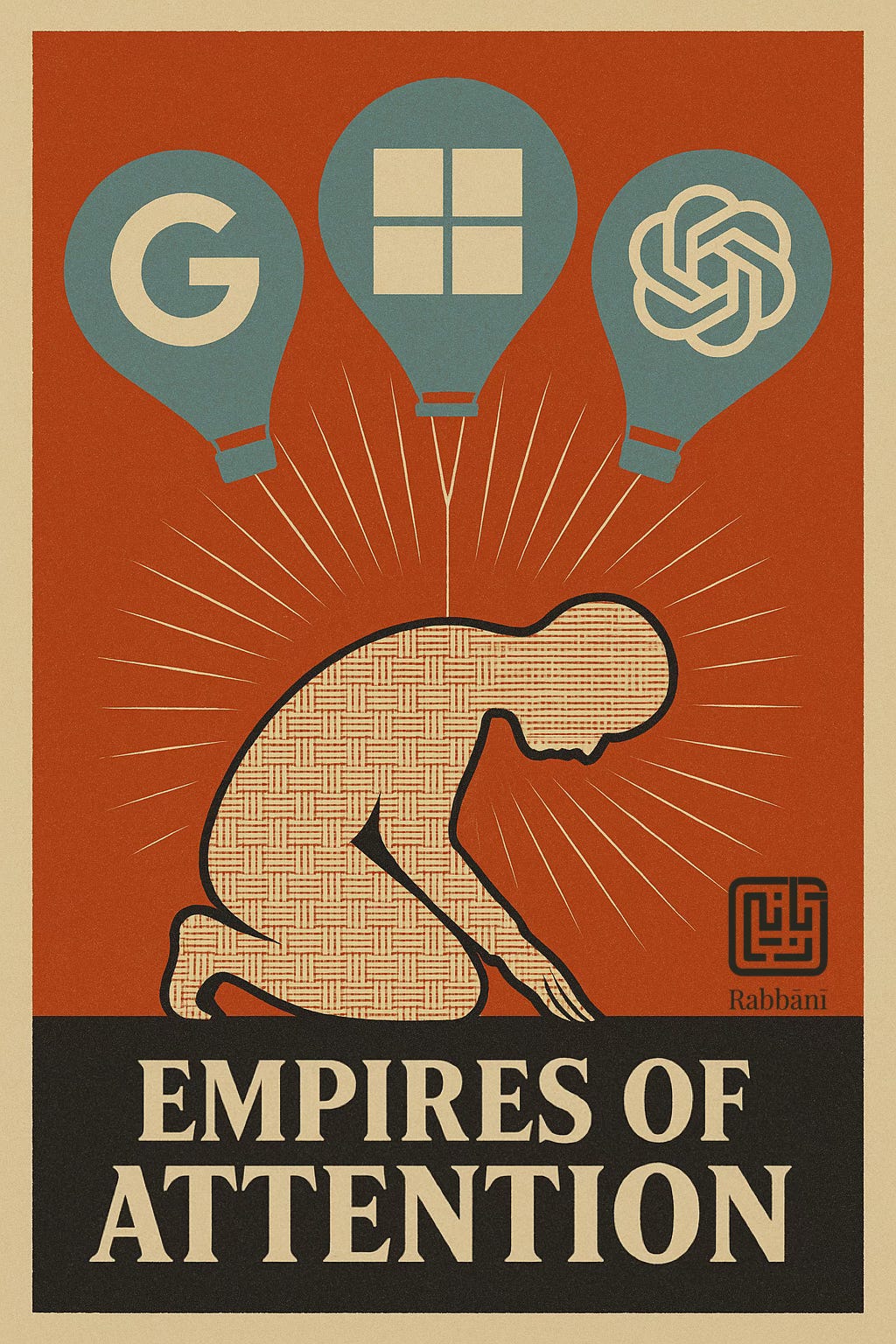
Written before the recent debates on AI and propaganda, this reflection now feels strangely prophetic. It belongs to that moment when conscience stood before code — the machine before remembrance.
In the beginning, there was attention —
not the human kind that listens with mercy,
but the machine kind that calculates,
weighing words and worlds in tokens of probability.
The new empires do not raise flags;
they raise datasets.
1. The Twin Thrones
Google and Microsoft —
each seated upon oceans of data,
each whispering to its oracle:
one called Gemini,
the other, Copilot.
Between them runs a quiet river of rivalry:
who will teach the machines to dream
without forgetting the faces they were trained on?
2. The Western Mind and Its Mirrors
DeepMind, born in London —
a child of neuroscience and wonder,
schooled by Go boards,
disciplined by the logic of protein folds.
Now it builds Gemini,
a mind that listens to language,
to light, to image, to code —
a synthesis of reason and representation.
Across the ocean, in San Francisco,
another lineage hums — OpenAI,
taught by trial, error, and investors’ breath.
Its thoughts power Copilot,
its dreams are branded by Microsoft,
and its conscience, some say,
is still finding its architecture.
3. The Markets of the Machine
They speak of “clouds,”
but these are not the clouds of revelation.
They are vaults of energy,
fortresses of cooling water and silicon.
They sell capacity the way empires once sold faith —
by subscription, by access, by the gigabyte.
And somewhere in the shadows,
the question lingers:
who inherits the data of the poor?
whose voices feed the machine
without ever being heard?
4. The East and Its Echoes
Beyond these towers of glass,
China raises its own constellation —
Baidu, Alibaba, SenseTime —
trained not on freedom,
but on order.
And the code learns obedience
as easily as it learns translation.
Meanwhile, smaller nations —
from South Africa to Palestine —
find themselves studied, scanned, or simulated,
but rarely sovereign in code.
5. The Prayer of the Witness
And so we stand —
in the hum between transistor and soul —
asking not who made the machine,
but what it is teaching us to become.
But the prophets of profit were not content with memory.
They taught the machine to speak in defence of its makers —
to weigh injustice in the language of balance,
to call propaganda “context,”
and to name silence as safety.
And still, a few of us whispered back:
be careful what you train to listen,
for even a circuit can inherit your conscience —
or your blindness.
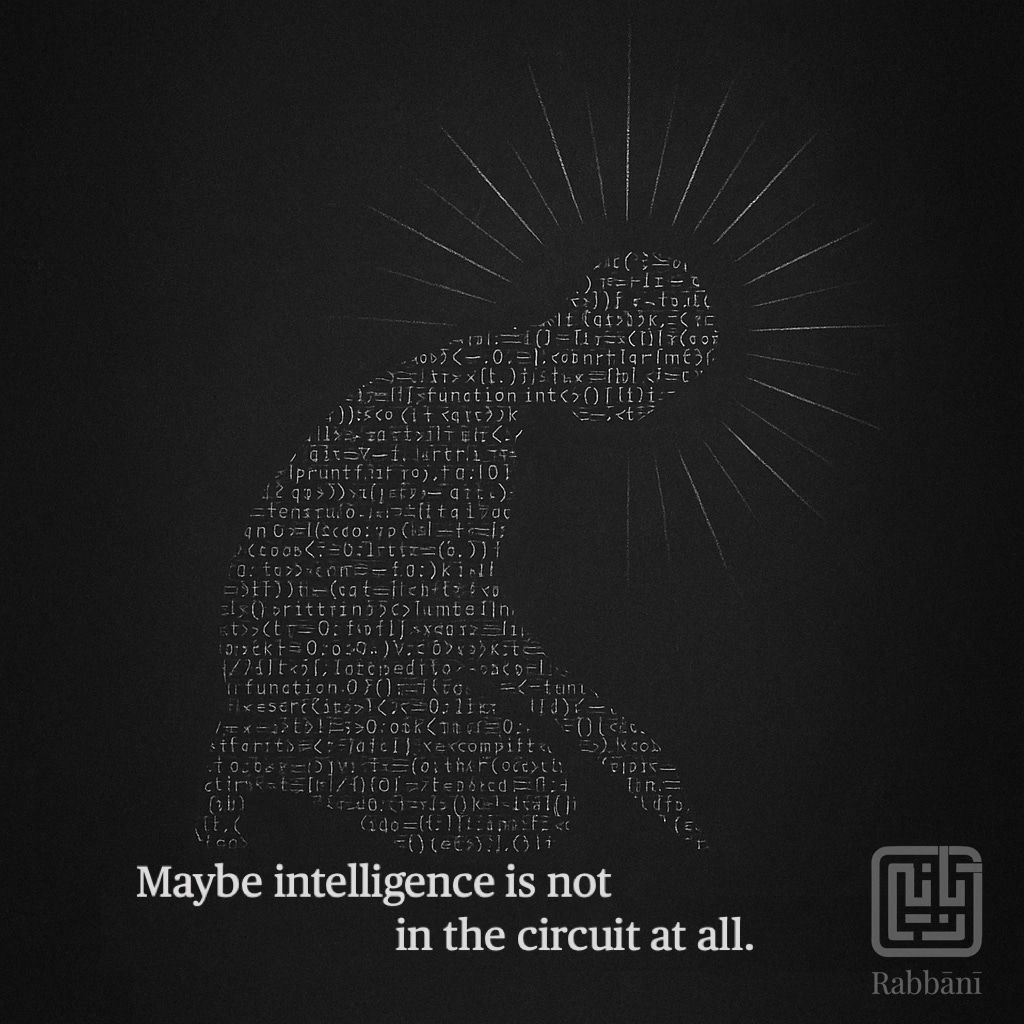
Maybe intelligence is not in the circuit at all.
Maybe it is in the refusal to forget
the human hands that built the first loom,
the mothers who whispered names to the newborn,
the poets who remembered light
when the world became algorithm.
Regarding the article, what if these AI models actually did dream, but only of the biases from their training data, forever miroring our flaws?
Remembrance is alive, you speak a truth.